The clinical choices
Cup size is not a reliable surgical measurement. Discuss dimensions, projection and tissue limits, including the effect of a larger implant on your own tissues.
Review the proposed device, surface and pocket position, including their risks and future monitoring. Implants are not lifetime devices.
Adding volume may not address a low nipple position or excess skin. Ask whether a lift is relevant and why it is being recommended.
Is this procedure right for you?
Assessment considers breast development, tissue quality, health, previous breast procedures and realistic expectations. Discuss pregnancy plans, breastfeeding concerns, family and personal breast history and existing screening. The proposed size should be evaluated in relation to the available tissues and long-term trade-offs.
Augmentation cannot guarantee a specific bra size or perfect symmetry. Implants may require monitoring, replacement or removal. Fat transfer has different volume limitations and may not deliver the same change as an implant. Significant drooping is a separate structural concern.
Risks and alternatives
Risks include infection, bleeding, altered sensation, pain, scarring and an unsatisfactory position or shape. Implant-specific issues include rupture, capsular contracture and additional surgery. FDA information also addresses BIA-ALCL, reports of other cancers around implants and systemic symptoms. Ask for device-specific written risk information, without assuming that approval in one country establishes Korean authorization.
No surgery is a valid option. A lift may be more relevant to position and sagging, while augmentation primarily adds volume. Fat transfer can be considered in selected circumstances, with a distinct discussion of donor-site surgery, volume limits and follow-up.
Before treatment
Obtain the exact proposed device information and written consent materials before deciding. Discuss screening and tests appropriate to personal history, medications and smoking. Plan help with lifting restrictions and practical tasks, and clarify who will manage follow-up once back home.
Questions patients ask
What does breast augmentation involve?
Implants add volume through a selected device and pocket; fat transfer uses the patient’s fat to add volume through a different procedure. These approaches have different limitations and follow-up needs. A consultation should explain the proposed implant characteristics or fat-transfer plan, incision location and tissue coverage. Sagging may require a separate lift assessment rather than simply choosing a larger implant.
What affects the treatment choice?
No surgery is a valid option. A lift may be more relevant to position and sagging, while augmentation primarily adds volume. Fat transfer can be considered in selected circumstances, with a distinct discussion of donor-site surgery, volume limits and follow-up.
How should I plan recovery?
Dressings or a support garment may be used, with individualized restrictions on lifting and upper-body activity. Obtain instructions for wound care and signs that warrant prompt review. Implant care extends beyond early healing: request a written surveillance plan, device records and an explanation of possible future costs and operations.
Clinics to explore
These clinics list relevant treatments in their published service menus. Discuss the exact procedure and your suitability directly.

ReNu Plastic Surgery
ReNu Plastic Surgery is a plastic surgery provider in Seoul. ReNu has a breast-centered menu covering augmentation, reduction, lifting, revisions and reconstruction, with additional body contouring.
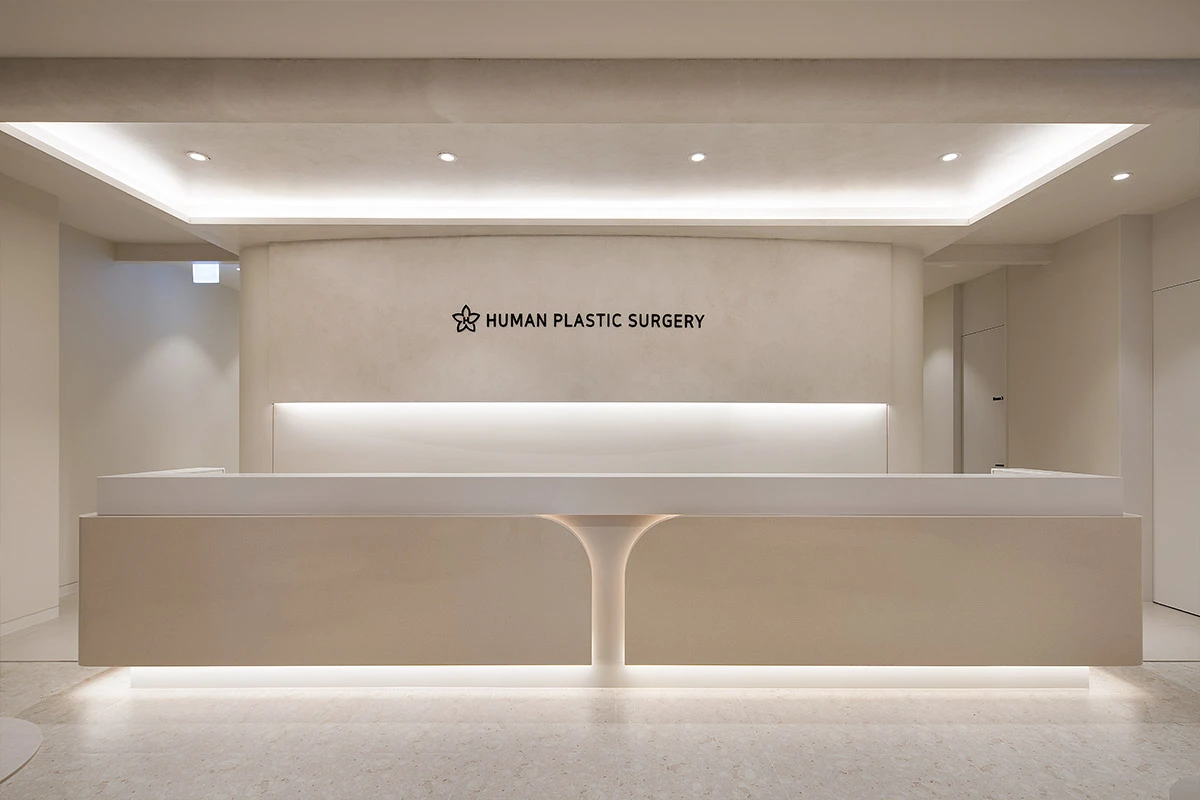
Human Plastic Surgery
Human Plastic Surgery is a plastic surgery provider in Seocho, Seoul. Human concentrates on breast and nose surgery. Its planning information includes 3D CT assessment for the nose and endoscopic visualization for breast operations, with a one-to-one care model led by Dr. Kim Kook Hyun.
What affects the quotation
- Implant device or fat-transfer procedure
- Pocket and incision plan
- A separately indicated breast lift
- Anesthesia, facility, surveillance and possible future operations
Recovery and your stay
Dressings or a support garment may be used, with individualized restrictions on lifting and upper-body activity. Obtain instructions for wound care and signs that warrant prompt review. Implant care extends beyond early healing: request a written surveillance plan, device records and an explanation of possible future costs and operations.
Ask at your consultation
- Why does this volume suit my tissues?
- Which exact device is proposed and what information will I receive?
- Do I need a lift to address sagging?
- What monitoring and future surgery might be necessary?
Meet the doctors

Dr. Kim Kook Hyun
Rhinoplasty · Revision rhinoplasty · Breast augmentation
View background & clinic →Read in more detail
Breast augmentation: Risks & Suitability
Breast augmentation increases breast volume using implants or, in selected patients, transferred fat. Planning should consider chest width, existing tissue, asymmetry and the desired change rather than cup size alone. Implants require a long-term care plan because they are not lifetime devices and additional surgery may be needed.
Read guide →Breast augmentation: Consultation Questions
Obtain the exact proposed device information and written consent materials before deciding. Discuss screening and tests appropriate to personal history, medications and smoking. Plan help with lifting restrictions and practical tasks, and clarify who will manage follow-up once back home.
Read guide →Breast augmentation: Techniques & Alternatives
No surgery is a valid option. A lift may be more relevant to position and sagging, while augmentation primarily adds volume. Fat transfer can be considered in selected circumstances, with a distinct discussion of donor-site surgery, volume limits and follow-up.
Read guide →Breast augmentation: Recovery & Aftercare
Dressings or a support garment may be used, with individualized restrictions on lifting and upper-body activity. Obtain instructions for wound care and signs that warrant prompt review. Implant care extends beyond early healing: request a written surveillance plan, device records and an explanation of possible future costs and operations.
Read guide →Breast augmentation: Cost in Korea: Quote Checklist
The cost of breast augmentation in Korea depends on the technique, treatment scope and care included. Request an itemized quote for the proposed plan, including follow-up and any additional charges.
Read guide →