The clinical choices
Describe discomfort, skin irritation and activity limitations alongside your desired size. The plan should fit your anatomy rather than promise a particular cup size.
Ask how the nipple will be moved, what incision pattern is required and how circulation and sensation are protected.
Future pregnancy, breastfeeding priorities and weight change can affect the decision and should be discussed before surgery.
Is this procedure right for you?
A useful assessment records the physical effects of breast weight: painful shoulder grooves, skin-fold irritation, exercise difficulty or trouble finding support. The surgeon also considers breast development, weight stability, medical conditions, smoking and expectations. Bring details of prior breast investigations and discuss future pregnancy. A clinician should assess a new breast symptom separately rather than assuming reduction will solve it.
Cup sizes vary between brands, and a surgeon cannot guarantee an exact bra fit. Natural asymmetry may persist. Changes in body weight or pregnancy can alter the result, and relief of every pain symptom is not assured when other causes are present. Scars are permanent even when they fade. Breastfeeding capacity and sensation deserve explicit discussion before surgery.
Risks and alternatives
Bleeding, infection, poor wound healing, asymmetry, sensory change and unfavourable scarring are possible. Fat tissue or nipple tissue can lose its blood supply; some patients need further surgery. Potential changes to breastfeeding may be important even if pregnancy is not planned immediately. Ask which risks are particularly relevant to your anatomy and whether a more extensive reduction changes the proposed nipple-preservation technique.
A well-fitted supportive bra and evaluation of other causes of pain may help clarify the problem without surgery. A lift addresses drooping when reducing volume is not the main goal. Liposuction-only reduction is a more limited option in selected anatomy and does not provide the same skin removal or repositioning as a surgical reduction.
Before treatment
Prepare a symptom and activity history, including skin irritation and the tasks you would like to perform more comfortably. Bring breast-health records and a complete medication list. Ask about appropriate investigations and the handling of removed tissue. Plan help with children, shopping and luggage so the early recovery does not depend on lifting heavy items.
Questions patients ask
What does breast reduction involve?
Reduction mammoplasty changes both volume and the skin envelope. The nipple and areola are usually repositioned while remaining connected to supporting tissue; the specific technique depends on anatomy and the required reduction. This makes the procedure different from simply removing fat. Ask for an explanation of the reshaping, tissue preservation and scar pattern rather than a promise based only on a bra size.
What affects the treatment choice?
A well-fitted supportive bra and evaluation of other causes of pain may help clarify the problem without surgery. A lift addresses drooping when reducing volume is not the main goal. Liposuction-only reduction is a more limited option in selected anatomy and does not provide the same skin removal or repositioning as a surgical reduction.
How should I plan recovery?
The care plan may include dressings, support garments and drains. Arrange wound checks and ask how to clean and protect the incision junctions. Desk work and lifting work have different demands; the surgeon should tailor restrictions to the job you actually do. Obtain the operation summary and any pathology follow-up arrangements before leaving Korea, rather than treating the last cosmetic photograph as the final clinical review.
Clinics to explore
These clinics list relevant treatments in their published service menus. Discuss the exact procedure and your suitability directly.

ReNu Plastic Surgery
ReNu Plastic Surgery is a plastic surgery provider in Seoul. ReNu has a breast-centered menu covering augmentation, reduction, lifting, revisions and reconstruction, with additional body contouring.
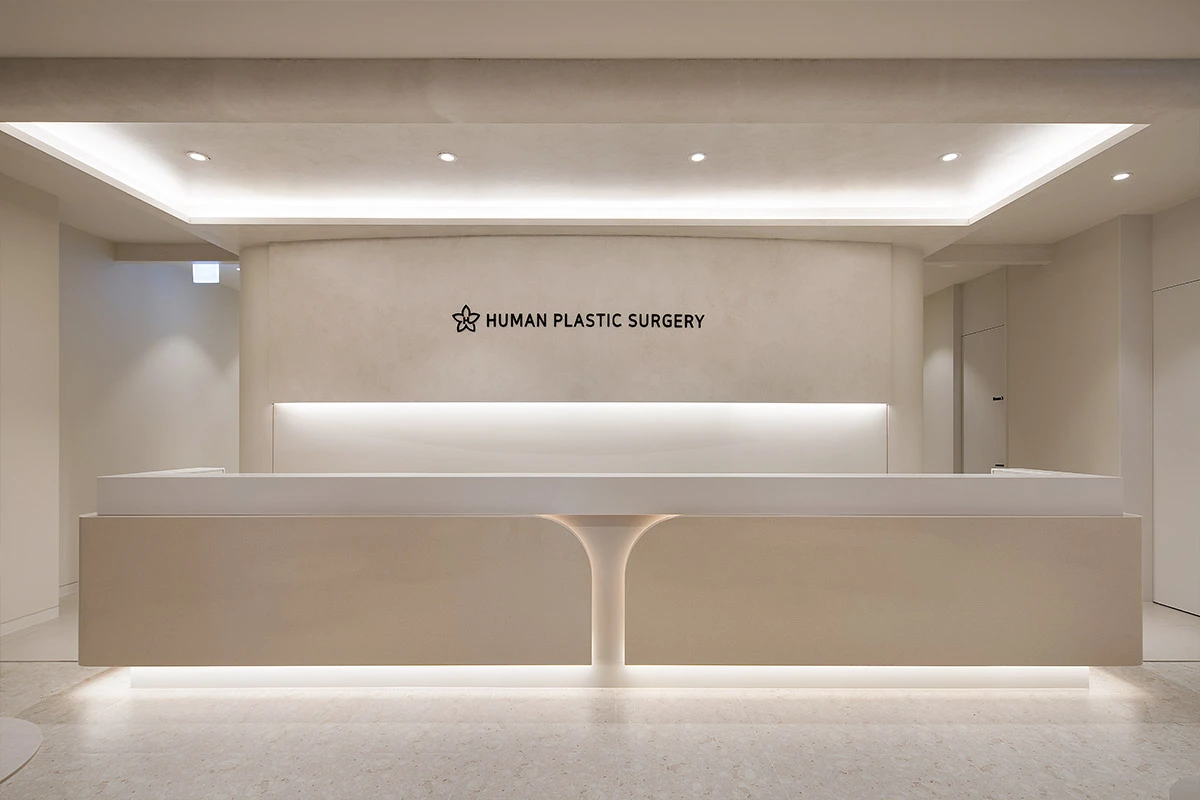
Human Plastic Surgery
Human Plastic Surgery is a plastic surgery provider in Seocho, Seoul. Human concentrates on breast and nose surgery. Its planning information includes 3D CT assessment for the nose and endoscopic visualization for breast operations, with a one-to-one care model led by Dr. Kim Kook Hyun.
What affects the quotation
- Amount of tissue removal and operative complexity
- Anaesthesia and facility charges
- Pathology or investigations when required
- Dressings, support garments and follow-up
- Unplanned treatment and revision policy
Recovery and your stay
The care plan may include dressings, support garments and drains. Arrange wound checks and ask how to clean and protect the incision junctions. Desk work and lifting work have different demands; the surgeon should tailor restrictions to the job you actually do. Obtain the operation summary and any pathology follow-up arrangements before leaving Korea, rather than treating the last cosmetic photograph as the final clinical review.
Ask at your consultation
- How does the plan address my physical symptoms?
- How will nipple blood supply be preserved?
- What are the likely scars and sensation changes?
- What should I understand about future breastfeeding?
- Will removed tissue be examined and how will I receive results?
Meet the doctors

Dr. Kim Kook Hyun
Rhinoplasty · Revision rhinoplasty · Breast augmentation
View background & clinic →Read in more detail
Breast reduction: Risks & Suitability
Breast reduction removes excess breast tissue, fat and skin to reduce breast weight and reshape the breasts. It may be considered for physical symptoms such as neck or back discomfort, skin irritation and activity limitation, as well as appearance. The operation requires balancing symptom relief and proportion with scars, nipple blood supply, sensation and breastfeeding priorities.
Read guide →Breast reduction: Consultation Questions
Prepare a symptom and activity history, including skin irritation and the tasks you would like to perform more comfortably. Bring breast-health records and a complete medication list. Ask about appropriate investigations and the handling of removed tissue. Plan help with children, shopping and luggage so the early recovery does not depend on lifting heavy items.
Read guide →Breast reduction: Techniques & Alternatives
A well-fitted supportive bra and evaluation of other causes of pain may help clarify the problem without surgery. A lift addresses drooping when reducing volume is not the main goal. Liposuction-only reduction is a more limited option in selected anatomy and does not provide the same skin removal or repositioning as a surgical reduction.
Read guide →Breast reduction: Recovery & Aftercare
The care plan may include dressings, support garments and drains. Arrange wound checks and ask how to clean and protect the incision junctions. Desk work and lifting work have different demands; the surgeon should tailor restrictions to the job you actually do. Obtain the operation summary and any pathology follow-up arrangements before leaving Korea, rather than treating the last cosmetic photograph as the final clinical review.
Read guide →Breast reduction: Cost in Korea: Quote Checklist
The cost of breast reduction in Korea depends on the technique, treatment scope and care included. Request an itemized quote for the proposed plan, including follow-up and any additional charges.
Read guide →